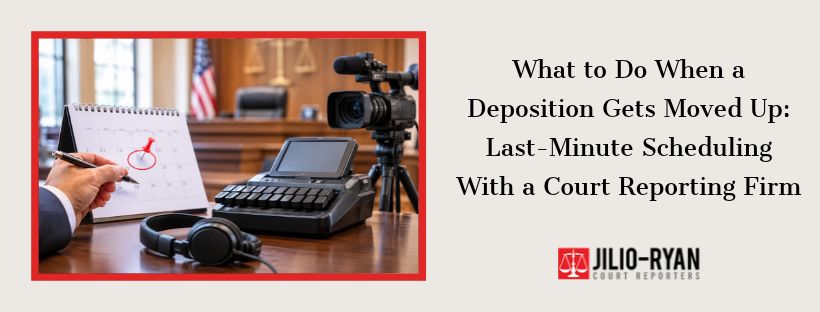
The witness who was unavailable until January is suddenly free on Thursday. Or opposing counsel agrees to move a deposition up to meet a deadline. Either way, the reporter you booked can no longer attend, and the clock is running. A scheduling change like this is stressful, but a clear first hour usually decides how smoothly it goes. A few details gathered up front separate a confirmed reporter by afternoon from a day of phone tag.
Why Depositions Get Moved Up
Most date changes come from a handful of causes. A witness with a narrow window of availability suddenly opens a day. A discovery or trial deadline tightens the calendar. A hearing, mediation, or settlement conference changes the order of work. Sometimes another professional cancels and leaves a gap.
Knowing the cause helps you make the right request. A moved date is a new booking, while an added session may extend coverage that already exists. Tell the scheduling team which one you have, since it shapes who they can assign.
Know the Notice Rules Before You Move the Date
In California, an oral deposition must generally be scheduled at least 10 days after service of the deposition notice under Code of Civil Procedure section 2025.270. Different timelines apply in some situations, so a short-notice date may need the other side’s agreement.
If a subpoena seeks a consumer’s personal records or an employee’s employment records, the deposition must be set at least 20 days after the subpoena is issued. Unlawful detainer cases use a shorter window of five days.
Rules differ by state and court, and this is a summary, not legal advice. Confirm timing with your supervising attorney before committing to a new date.
What a Reporting Firm Can Arrange Quickly
Some firms can schedule certified court reporters, legal videographers, and certified legal interpreters at any hour on any day, as part of their deposition services. Availability still depends on the date and the needs of the case.
No firm can guarantee coverage for every request. The sooner you call after the date changes, the more options you will have. Calling the day the date is set often matters more than waiting until the full case file is ready.
Time of day matters too. An early morning or late afternoon start may draw on different people than a midday session. If your start time has any flexibility, offer a window rather than a single minute.
Choosing Between In-Person and Remote on Short Notice
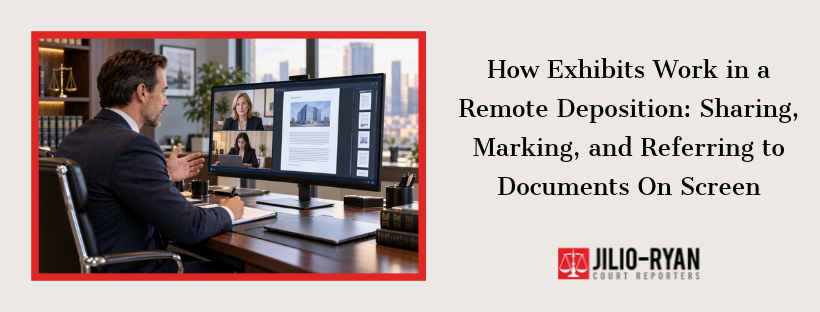
When a date is tight, a remote or hybrid setup can open options that travel cannot. A witness across the country may be reachable the same week through a video link, and the reporter can attend from a different location.
The tradeoff is a more technical setup. Settle the platform, the link, and the exhibit method early, and review how video services support live streaming for attendees who cannot be present.
The Information to Have Ready
Gather these details before you call or submit a request:
- Case name, court, and case number
- New date, start time, and estimated length
- Location, or the remote platform and who will send the link
- Witness name and role, plus the attending attorneys
- Whether video, an interpreter, or a live transcript is needed, and in which language
- An exhibit list or technical terms the reporter should know
- A billing contact for the party ordering the transcript
Matching the Change to the Right Request
Situation | What to tell the firm |
Date moved earlier | The original booking details and the new date, and whether the same reporter can attend |
New session added | The case name, the witness, and how the session relates to the earlier one |
Location changed to remote | The platform, who sends the link, and who will present exhibits |
Language need found late | The language and dialect, whether the testimony is remote or in person, and its expected length |
Interpreters and Videographers Need More Detail
A reporter needs a time and a place. An interpreter needs a language, and sometimes a specific dialect or regional variety. A videographer needs to know whether the recording may be used at trial, since that affects setup and framing.
If any of these are possible, mention them in the first message, even as “possible.” Adding a team member later is harder than releasing one who turned out to be unnecessary.
Preparing the Room and the Witness on a Short Clock
A fast booking still needs the usual groundwork. Confirm the address, parking, and building access with the witness, along with any identification the parties have agreed to check. For remote sessions, send the link early and ask everyone to test their connection before the day.
Exhibits can follow the booking by a few hours. What cannot wait is a clear start time and a named contact for each side, so the reporter knows whom to reach if someone is running late.
A Quick Timeline for the First Hours
Work in order, and most steps take only minutes when the information is gathered first.
1. Confirm the date and notice period with your supervising attorney.
2. Send the details above to the reporting firm and ask for written confirmation.
3. Confirm the location or link with the witness and counsel.
4. Send exhibits or terminology lists to the reporter as soon as they are ready.
5. Reconfirm everyone’s arrival time the day before.
Mistakes That Cost the Most Time
Treating a phone call as a booking is the first. A verbal yes is not a booking until the firm confirms it, so ask for written confirmation with the date, time, and location.
Forgetting a service is the second. Remembering an interpreter after the reporter is confirmed forces another round of scheduling, often at the worst moment.
Changing details without telling everyone is the third. A new location that reaches the witness but not the reporter creates the delay you were trying to avoid.
Overlooking transcript needs is the fourth. Decide early whether you need the transcript quickly and ask what delivery options exist, so the schedule after the deposition is planned along with the day itself.
Cancellations and Changes Cut Both Ways
Every change touches a professional’s calendar. When you move a deposition up, the original reporter is released, and the new date may land on a day another assignment already fills. Moving a date back creates the same problem in reverse.
Ask about cancellation and rescheduling terms before you commit, and notify the firm the moment a date is settled. Prompt notice gives the firm time to reassign people and gives you better odds on the new date.
Short on Time? Start Here
When a date moves, the details above are all the scheduling team needs to begin. Jilio-Ryan can arrange reporters, videographers, and interpreters from its Tustin, California office at any hour, any day.
Use the Schedule a Deposition page for a standard booking, or reach the team through the Contact Us page for an urgent request.
FAQs
- How much notice does a firm need?
There is no single answer. Availability varies by date and by the services needed, so call as soon as the date is set. This is separate from the legal notice period for the deposition itself.
- Can an interpreter be added late?
Sometimes. It depends on the language and who is available that day. Share the language and dialect in your first message.
- What if the location changes after booking?
Tell the firm right away. Moving from an office to a remote setup changes the equipment and the way exhibits are shared.